

In this guide
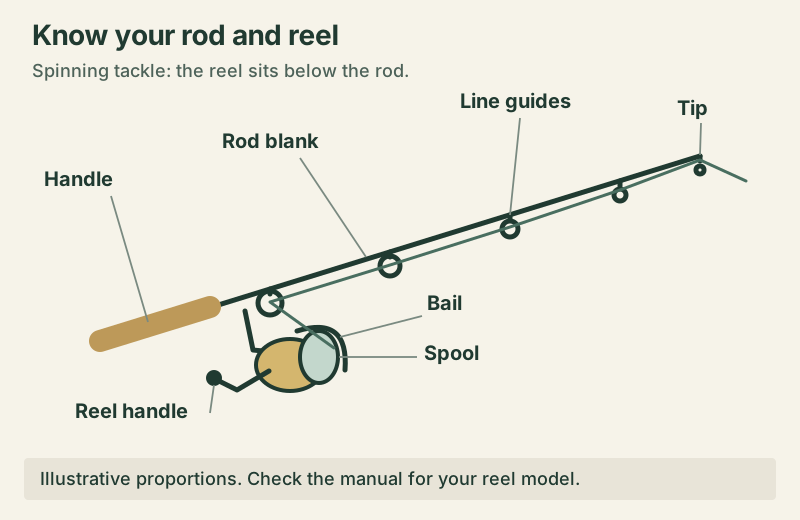
A first kit should make it easy to put a bait in the water, recognise a bite and handle a fish promptly. For a small pond with accessible banks, a light spinning or spincast outfit and a simple float rig make a practical starting point. This is a starting method for modest freshwater fish, not a prescription for big catfish, heavy cover or every waterbody.
Choose the trip before the tackle
Find out which fish are present using the water manager’s information. Confirm that bait fishing is allowed, that you can reach the bank legally and that the ground suits your mobility. A bargain outfit is poor value if its line and casting range do not suit the place you intend to fish.
Ask a tackle shop to match the reel, line and total casting weight to the rod’s printed ratings. A complete combination can remove guesswork, but still check how it feels in your hand. The handle should turn smoothly, the reel should sit securely and the controls should be easy to reach.
A compact equipment list
- One rod and compatible reel, filled with suitable monofilament line.
- A small selection of single hooks, floats and split shot appropriate to the intended bait and fish.
- Bait permitted at the venue, in a secure container.
- Line cutters, long-nose pliers or a suitable hook remover, and a soft rubber or knotless landing net.
- A small tackle box that closes securely, plus a container for discarded line and damaged hooks.
- Drinking water, sun protection, weather clothing, closed footwear and a properly fitted life jacket for fishing near water.
A measuring board is useful if you may retain a fish or want to record length. Check the relevant measuring method and local rules first. Do not buy a stringer as a substitute for deciding how you will handle a catch.
Spend where it removes a problem
Keep enough of the budget for line, replacement hooks and personal safety equipment. A wide selection of lures is less useful at this stage than learning one rig. Borrowing tackle from an official loan programme or attending an agency clinic can help you discover which controls suit you before buying.
Avoid treating reel size numbers as universal. A number such as 2000 or 2500 can describe different physical sizes between brands. Read the actual capacity and compatibility information instead.
Check the kit at home
- Assemble the rod with its guides aligned and secure the reel without overtightening.
- Thread the line through every guide and learn to open and close the reel’s line-release control.
- Tie a practice rig, inspect the knot and pull-test it safely without an exposed hook.
- Pack the net and unhooking tools where you can reach them with one hand.
- Practise casting a hookless practice plug in an open, permitted area.
After the first trip, replace what was lost or proved unsuitable. Add equipment to solve a specific limitation, such as a float that cannot fish the required depth, rather than buying everything in the aisle.
Questions from the bank
Keep it helpful. Comments are moderated. Do not share precise locations or personal information.
No approved comments yet. Ask a practical question or share what you learned.