

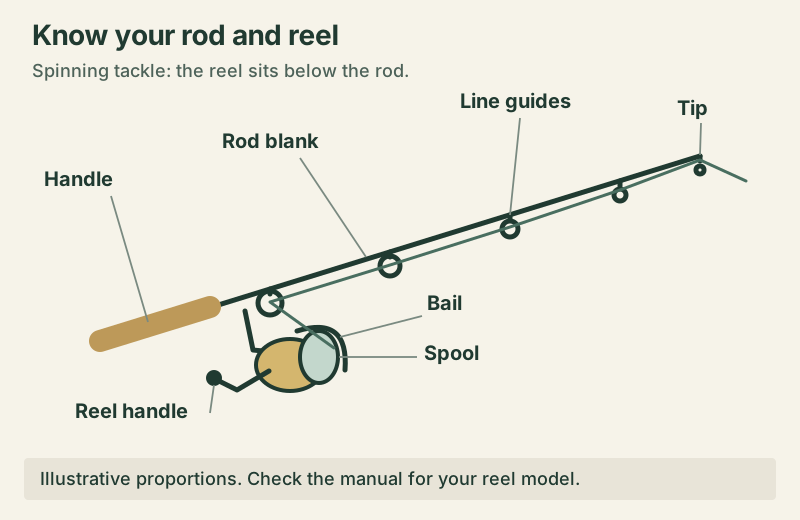
A spinning outfit carries its reel below the rod. The line sits on a fixed spool, passes around the bail’s line roller and runs through the rod guides. Opening the bail lets line leave the spool for a cast; closing it puts the line back under the reel’s control.
This arrangement is useful for many light bait and lure methods. It does not make every spinning outfit interchangeable. A short light rod for a small pond has different jobs from a heavy rod intended for large fish or substantial casting weights.
Read the rod before choosing the rest
The rod’s label normally includes length and recommended line or lure ranges. Treat those ranges as the manufacturer’s limits for that model, not a guarantee that all combinations within them will feel identical. The weight being cast includes the lure, or the hook, bait, float and sinkers together.
Power describes the resistance needed to bend the rod. Action describes where it bends under load. Manufacturers do not all apply these terms in exactly the same way, so handle an assembled outfit if possible rather than choosing by a label alone.
A longer rod can help manage line, but also needs more room and can tire a small angler. Comfort and control deserve as much attention as casting distance. You should be able to hold the rod ready without constantly shifting your grip.
Find the controls
- Reel seat: clamps the reel foot to the rod.
- Spool: stores the line and carries its capacity information.
- Bail and line roller: guide line onto the spool during retrieval.
- Handle: winds line in; many spinning models allow it to be moved to the other side.
- Drag control: adjusts how readily line can be pulled off under tension.
A reel’s gear ratio describes how its mechanism turns with the handle, but actual line recovery also depends on spool dimensions and fill. Beginners usually gain more from learning a steady retrieve than from chasing a particular ratio.
Assemble and inspect
- Align the rod sections and guides using the maker’s instructions. Do not force a joint that does not seat normally.
- Seat the reel foot fully and tighten the locking ring until secure.
- Open the bail, then run line through every guide, including the small tip guide.
- Close the bail and check that the line runs through the line roller without wrapping around the rod.
- Set the drag before fitting an exposed hook or lure.
If line refuses to leave the spool during a practice cast, check the bail and line path before pulling harder. If the handle turns without retrieving normally, stop and inspect the line around the spool and bail. Forcing a jam can turn a small tangle into damage.
Keep the model’s manual. It is the right reference for spool filling, lubrication and spare parts. The next useful skill is controlling drag, followed by short, accurate casts with a hookless practice weight.
Questions from the bank
Keep it helpful. Comments are moderated. Do not share precise locations or personal information.
No approved comments yet. Ask a practical question or share what you learned.