

In this guide
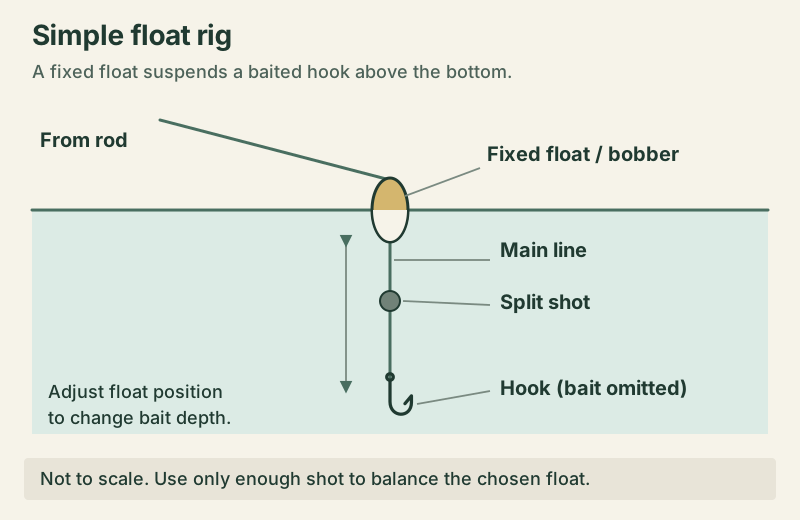
A float, often called a bobber in the US, holds a bait at a chosen distance beneath the surface and shows movement on the line. It suits beginners because much of the action is visible. You can see where the rig lands, follow its drift and learn the difference between wind movement and a possible bite.
Begin in calm water with enough depth and open space to fish a short cast. A fixed float is straightforward for shallow presentations. When the desired depth creates an awkward length of line below the float, a correctly assembled slip-float rig is a useful later skill.
Put the simple rig together
Use a compatible rod, reel and line, a small float, suitable single hook and enough split shot to balance the float. The shot is small weight attached to the line. Check local restrictions on tackle materials and bait before choosing either.
Place the float above the weight and hook, following its fitting instructions. Use pliers carefully on split shot; teeth are not a tackle tool. Avoid crushing or nicking the line, and inspect the attachment after adjustments.
The hook-to-float distance controls the intended fishing depth, but it does not tell you the actual depth of the pond. A sloping bottom, drifting rig and uneven weight placement all change how the bait sits. Test close in where you can observe the rig safely.
Fish a short, manageable cast
- Check the knot, bait and line path, then set the drag.
- Lower the rig near the bank to see how the float rests. It should remain visible without needing excessive force to move.
- Cast gently beyond your chosen patch of open water beside cover, keeping clear of people.
- Close the bail and take up loose line without dragging the float out of position.
- Watch for a definite change from its normal movement, such as purposeful travel or submergence.
- With a conventional J hook, recover slack and lift the rod in a controlled movement. Use the appropriate steady-tightening technique if fishing a circle hook.
Do not wait an arbitrary long count to let a fish swallow bait. Remain attentive and check the rig when activity looks unusual.
Adjust one thing at a time
If the float sinks without a bite, reduce weight or check that it is not damaged. If it lies flat, the shot may be on the bottom or the rig may be tangled. Retrieve and inspect before continuing.
If bait comes back covered in weed, fish shallower or move to a clear opening. If there are no bites, try another sensible depth or nearby position before changing every piece of tackle. Record what changed so you can learn from the session.
Prepare for the catch
Keep a landing net and unhooking tool ready before casting. Select a bank position where a fish can be brought in without being lifted a long way through the air. A float rig is a teaching tool, not a reason to fish unsafe ground or ignore the needs of the species you catch.
Questions from the bank
Keep it helpful. Comments are moderated. Do not share precise locations or personal information.
No approved comments yet. Ask a practical question or share what you learned.