

In this guide
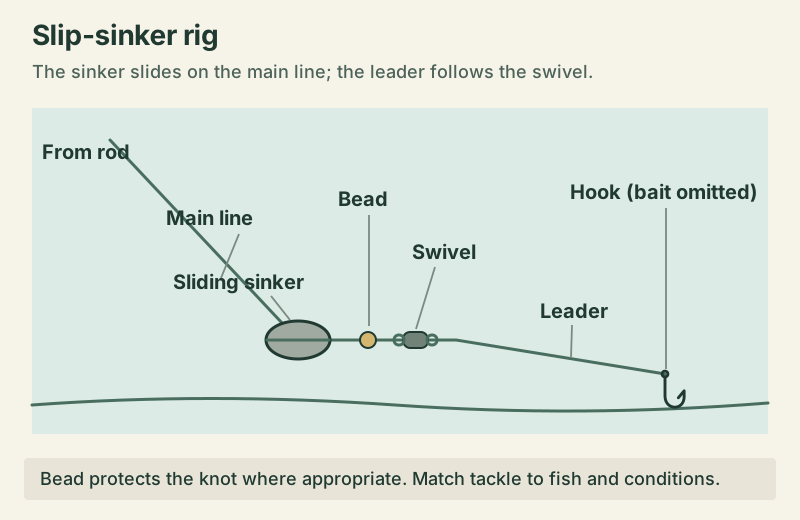
A slip-sinker rig lets the main line pass through the weight. A swivel below the weight stops it travelling down to the hook, while a separate leader carries the bait. It is a practical option for stationary bottom fishing where the bed is reasonably clear.
What each part does
- Sliding sinker: takes the rig down while allowing line to move through its hole.
- Optional protective bead: sits between sinker and knot when suitable for the components.
- Swivel: stops the sinker and provides the leader attachment.
- Leader and hook: position the bait beyond the main weight.
Sliding does not mean resistance-free. A rough sinker hole, weed, a poor line angle or tension from the rod can still be felt through the rig.
Assemble it
- Choose a sinker within the rod’s casting rating, allowing for the weight of the bait and other tackle.
- Thread the main line through the sinker, then through the bead if used.
- Tie on a small, suitable swivel with a knot approved for the line.
- Attach a leader to the other swivel eye. About 12 to 24 inches is a practical starting example in open water; change it if the bait tangles or the bed requires a different presentation.
- Tie on the hook, inspect all connections and test that the sinker moves freely.
- Add legal bait, make a controlled cast and let the weight settle. Place the rod securely and stay with it.
Fish the setup deliberately
Use enough weight to hold the chosen position, not the heaviest sinker in the box. Retrieve at intervals to check whether weed, debris or soft mud has spoiled the bait presentation. If the rig returns buried in weed, choose another spot or a different method.
Hook style changes the response
A J-hook and a circle hook are not worked identically. With a suitable circle-hook rig, steadily taking up tension is generally the intended approach rather than a sharp strike. Follow the hook manufacturer’s instructions and local requirements; keep the hook point and gap clear of bait.
Avoid common errors
Long leaders can wrap around the main line during a forceful cast. Oversized swivels add bulk without solving poor knotwork. If a rig becomes stuck, do not point a bent rod toward people or pull line with bare hands. Learn snag management before choosing heavily obstructed water. A simple float rig is easier when the bait needs to sit well above the bed.
Questions from the bank
Keep it helpful. Comments are moderated. Do not share precise locations or personal information.
No approved comments yet. Ask a practical question or share what you learned.