

In this guide
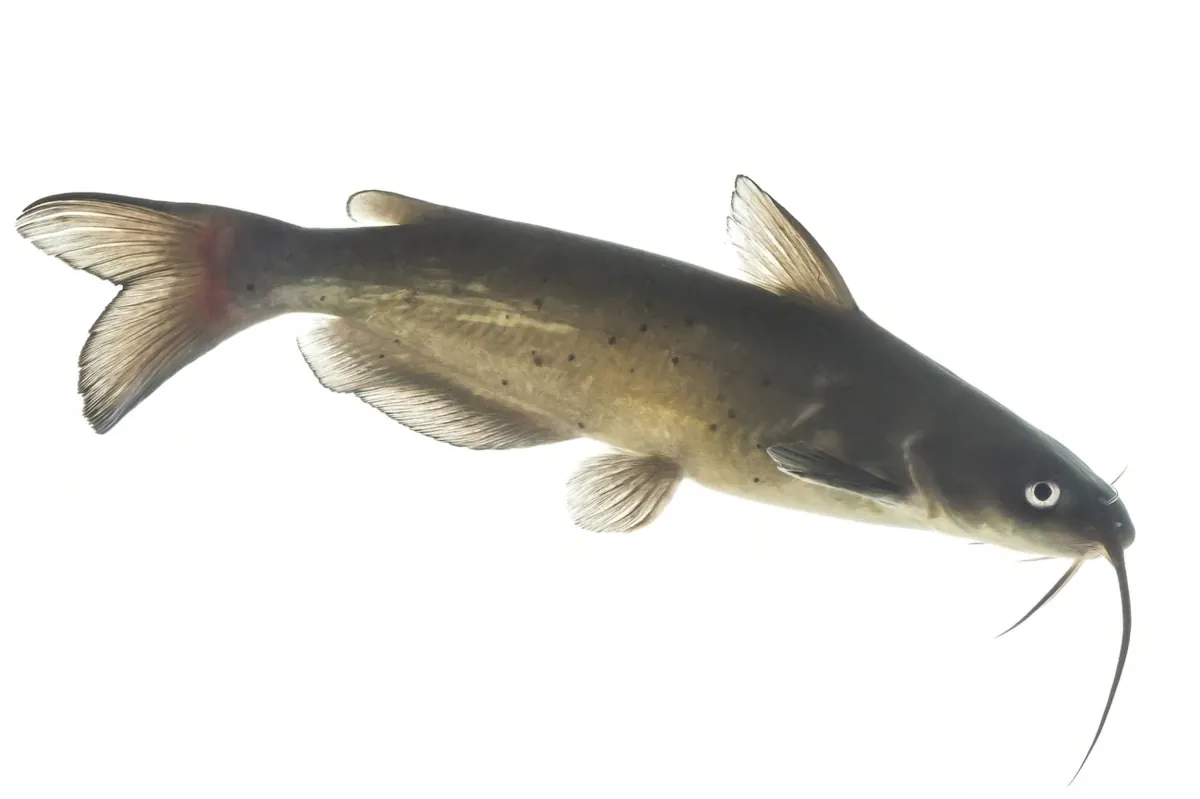
Channel catfish, Ictalurus punctatus, can be caught from the bank with straightforward bait tackle. They are not confined to huge rivers: populations also occur in smaller waters and stocked ponds. Confirm the species and access with the local fishery before building a trip around them.
Identify more than the whiskers
Barbels around the mouth and smooth, scaleless skin identify a catfish, not necessarily a channel catfish. The deeply forked tail helps narrow the choice. Dark body spots are common but may be absent on very small fish and large adults.
The outer edge of the channel catfish’s anal fin is generally rounded, with fewer rays than a blue catfish. Blue catfish are an important lookalike; hybrids can complicate identification too. Use the local agency’s complete guide and do not reach a confident decision from colour alone.
Water and feeding
Channel catfish occupy varied river, lake and pond habitats. Pools and areas near cover can be useful starting points when they are safely accessible. They eat a broad mixture of animal and plant foods and use chemical senses to locate food.
Do not turn a general preference for low-light feeding into a requirement to fish an unfamiliar bank at night. A short daylight session with safe footing is a more manageable first attempt.
A beginner bottom rig
- Choose tackle suitable for the fish size expected at the water, not just the smallest fish you hope to catch.
- Use a sliding sinker above a swivel, with a leader and appropriate hook below.
- Select enough weight to keep the bait in position while remaining within the rod’s total casting rating.
- Use only bait permitted for that jurisdiction and water. Worms, prepared baits and fish-based baits have different rules and handling needs.
- Secure the rod, stay beside it and check the bait periodically.
Season and realistic size
Activity changes with water temperature and local conditions. Missouri lists adult channel catfish commonly at 12 to 32 inches and 1 to 15 pounds, a broad regional description rather than a predicted catch. Larger specimens exist, but record fish are not an appropriate basis for a beginner’s tackle promise.
Handling
The dorsal and pectoral fins have sharp spines. The barbels are sensory organs, not stingers. Use a suitable net, prepare pliers and learn a safe grip from a competent instructor before handling a lively fish. Avoid fingers in gills and support the body. Check current fishing rules and local consumption advice before deciding to retain any fish.
Questions from the bank
Keep it helpful. Comments are moderated. Do not share precise locations or personal information.
No approved comments yet. Ask a practical question or share what you learned.