

Foundation · Freshwater · All methods
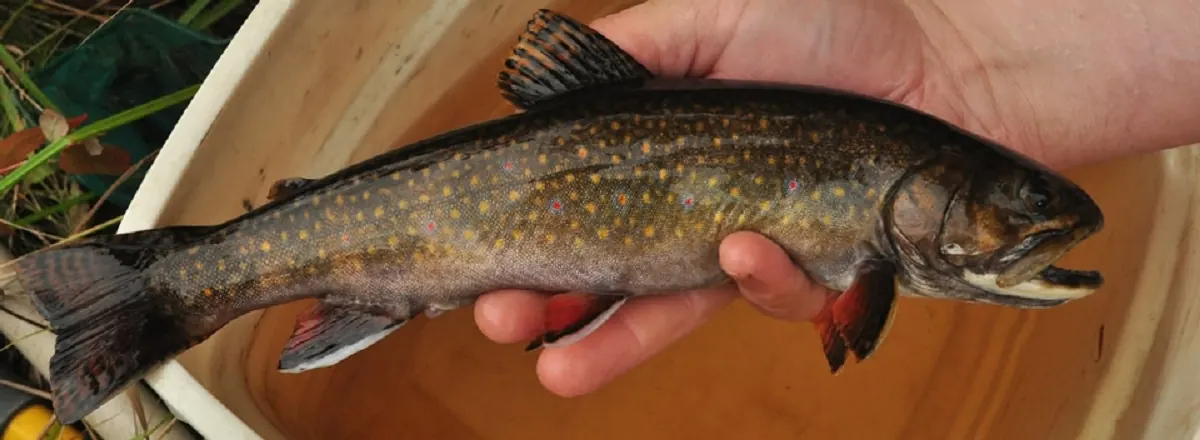
Brook trout belong to the char group. In a clear side view, look for pale spotting on a darker body. Then look above the lateral line and below the belly for two checks that a glimpse of red spots alone cannot give you.
Where to look on a brook trout
- Across the back: follow the winding, worm-like markings towards the tail. The pattern is easier to see when the back is visible as well as the side.
- Along the lower fins: look for a white front edge, often followed by a dark stripe. The rest of the fin may be orange.
- On the flank: some red spots have blue halos. Compare this with the dark spotting typical of brown trout.
What if the markings do not agree?
Brook trout use cold streams and can also live in ponds and lakes. Where brook trout, lake trout and their hybrid, splake, occur together, consult the local identification key. A brook trout generally has a squarer tail than a lake trout. A half-folded tail in a photograph can hide that distinction. Record the identification as uncertain if the available features conflict.
Questions from the bank
Keep it helpful. Comments are moderated. Do not share precise locations or personal information.
No approved comments yet. Ask a practical question or share what you learned.