

In this guide
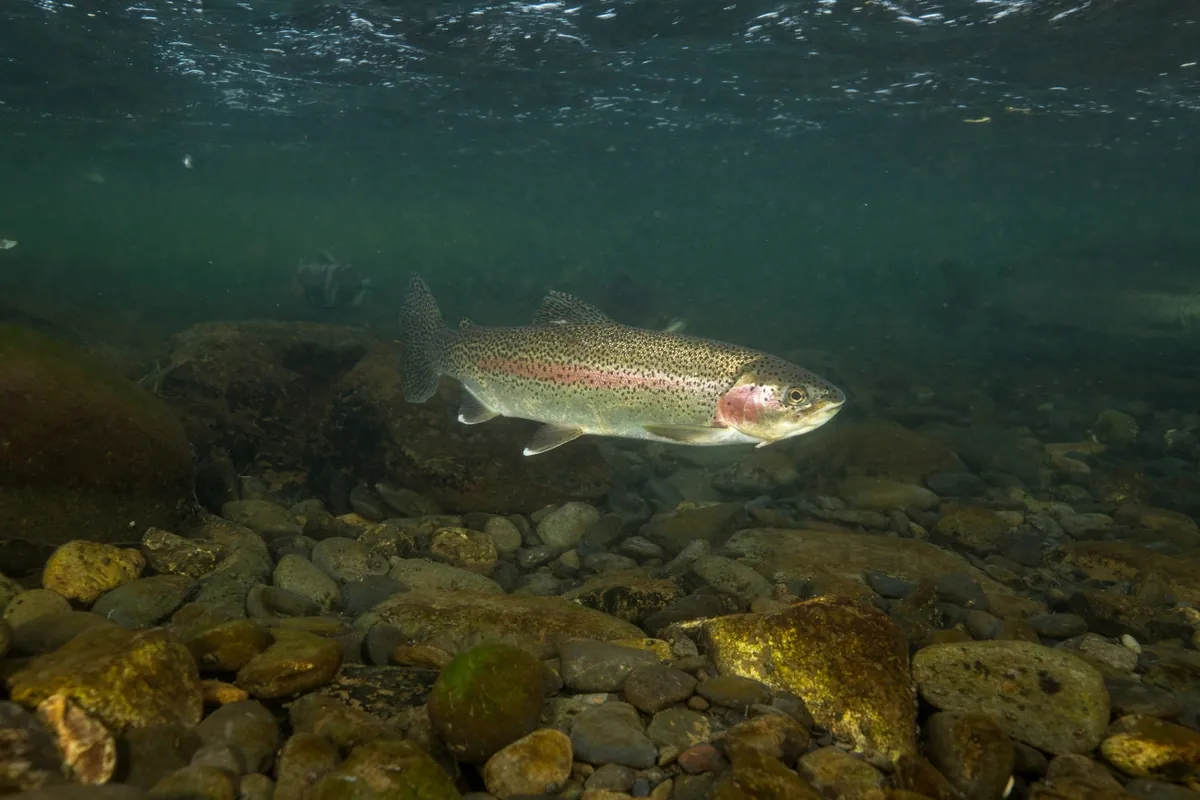
Rainbow trout, Oncorhynchus mykiss, are coldwater fish found in native and introduced populations. Some waters depend on stocking; others support naturally reproducing fish. A stocking notice is useful evidence of a release, but it is not a guarantee of a catch or permission to fish.
Identification
Look for small dark spots, including spots on the tail, an often pinkish side stripe and a small fleshy adipose fin between the dorsal fin and tail. Colour varies. Compare the complete pattern with other trout in the local agency’s identification guide.
Steelhead are an ocean-migrating life-history form of the same species. A silvery photograph alone does not prove a fish’s migration history. This page covers a beginner freshwater approach, not a steelhead trip plan.
Verify the fishery first
Check the official water listing, access map and current regulations before packing. Trout waters may have rules about bait, lures, hook type, retention or seasonal access that differ from neighbouring waters. Confirm the exact named stretch or lake rather than applying a statewide headline loosely.
Rainbow trout need suitable cool, oxygenated water. Avoid treating a calendar month or a single temperature threshold as a complete welfare assessment. Follow current local heat advisories and stop targeting trout when conditions or official guidance make release problematic.
A manageable first approach
- Select a permitted bank location where you can land a fish safely without entering the water.
- Use matched light spinning tackle and a small lure within the rod’s rating, or a legal bait presentation where allowed.
- Approach quietly and make a controlled short cast before trying for distance.
- In moving water, pay attention to the route through the current. Keep enough contact to notice an unusual movement without towing a drifting bait unnaturally.
- Check the lure or bait after each retrieve for weed and damage.
Food and size
Trout eat aquatic and terrestrial insects, other invertebrates and sometimes small fish. This explains the variety of working methods; it does not make one lure colour universally correct. Missouri describes many rainbow trout at 10 to 15 inches, with larger fish possible. Other fisheries and life histories differ, so keep that figure in its regional context.
Release preparation
Prepare a soft, fish-safe net and unhooking tool before casting. Wet your hands, keep the fish in water where possible and avoid squeezing its body or touching gills. A photograph can wait if it would prolong handling. Move on to learning current seams and depth control after you can make accurate, safe casts.
Questions from the bank
Keep it helpful. Comments are moderated. Do not share precise locations or personal information.
No approved comments yet. Ask a practical question or share what you learned.