
In this guide
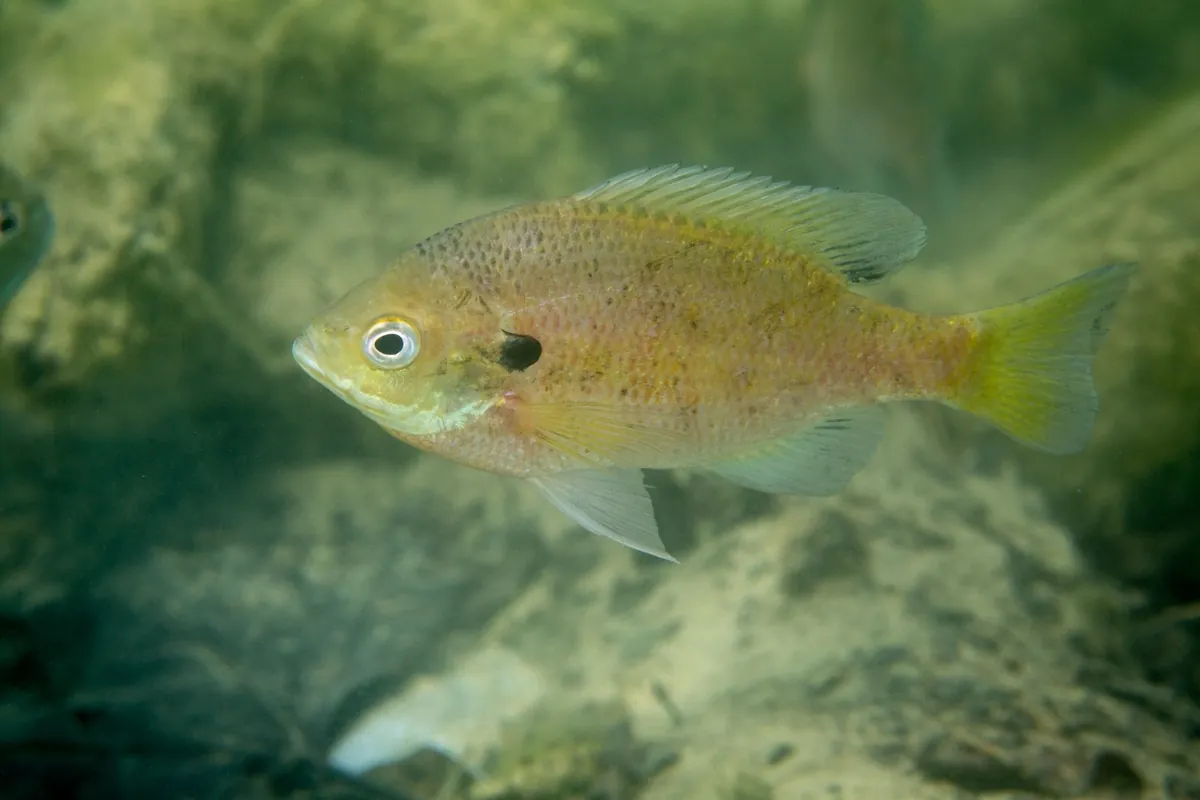
Bluegill are small-mouthed sunfish that make a useful first target where their presence is confirmed. Their scientific name is Lepomis macrochirus. Regional names such as bream and sunperch can refer to more than one fish, so learn the features rather than relying on a nickname.
Identification
Look for a deep, compressed body, a small mouth, a dark gill-cover flap and a dark mark toward the rear of the dorsal fin. The pectoral fin is long and pointed. Colour changes with age, habitat and breeding condition; a bright belly alone does not establish the identification.
Other sunfish and hybrids can confuse beginners. Compare several features with the local agency’s guide. Do not identify a fish from a blurred side view with the fins hidden, especially when the decision affects whether it may be kept.
Range, habitat and feeding
Bluegill have been widely introduced beyond their original North American range. A national distribution statement is not proof they occupy a particular pond. Look for a current species list or fisheries survey for the water you intend to visit.
Vegetation, quieter margins, backwaters and cover can provide useful places to start. Their small mouths suit small food items; insects and other small aquatic prey are part of the diet. Fish may feed at different levels, so a bait fixed to one depth is a test, not the only correct presentation.
A beginner plan
- Choose a permitted bank position with safe access and space behind you.
- Use a small fixed float, modest split shot and a hook that fits a small piece of legal bait.
- Check the depth and keep the bait clear of weed before waiting for bites.
- Watch closely. If bait disappears repeatedly, inspect the hook point and reduce a bulky bait rather than automatically striking harder.
- Try a small depth change before moving to a new area.
Size and seasonal context
Bluegill sizes vary considerably between populations. Missouri’s profile gives a length up to about 9½ inches and a usual weight up to 12 ounces; these are regional reference figures, not a promise for your pond or a national record claim. Spawning activity and shallow nests depend on local temperature and season. Avoid trampling nests or disturbing fish unnecessarily.
Handling and next steps
Prepare a wet landing net and unhooking tool before you catch one. Take care around the dorsal spines, support the fish and minimise time out of water. Check the current state’s fishing rules and any water-specific provisions. Next, practise balancing a float so bites are easier to read.
Questions from the bank
Keep it helpful. Comments are moderated. Do not share precise locations or personal information.
No approved comments yet. Ask a practical question or share what you learned.