

In this guide
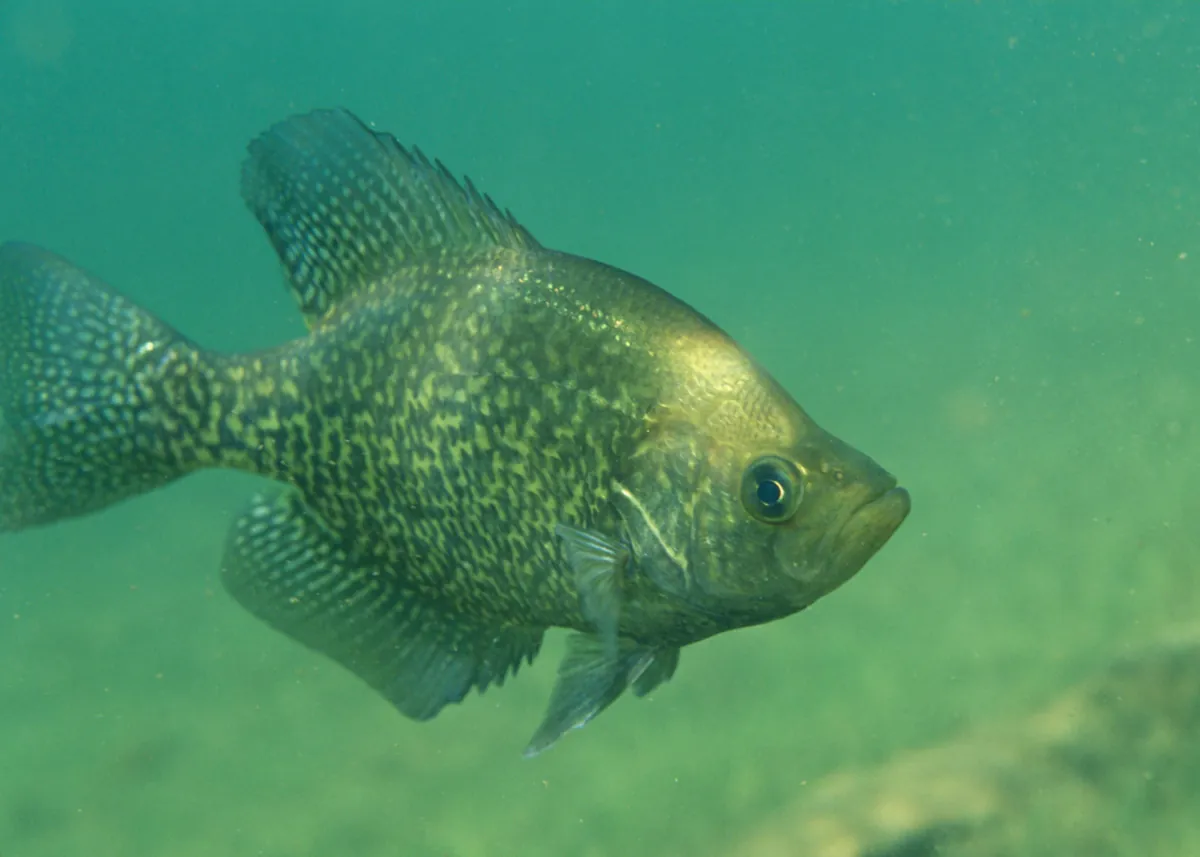
Black crappie, Pomoxis nigromaculatus, are deep-bodied members of the sunfish family. A light jig or bait under a float can put them within reach of a bank angler, provided fish are present and holding near accessible water.
Separate black and white crappie
Black crappie usually show irregular dark speckles and blotches rather than the clearer vertical bars associated with white crappie. Black crappie commonly have seven or eight dorsal spines, whereas white crappie generally have six. Count carefully without pressing against sharp fins, and compare several features rather than a single patch of colour.
Breeding condition, lighting and an awkward photograph can change the impression of the pattern. If you cannot establish the identification, use the local fishery’s guidance before making a retention decision.
Habitat and feeding
Standing waters and slower backwaters with vegetation or submerged timber can support black crappie. Their diet includes small fish, aquatic insects and crustaceans. They may suspend above the bottom, so a bait sitting in mud can miss the layer they are using.
Broad distribution does not confirm an individual pond. Look up a recent official species list or survey, and check bank access separately from the presence of fish.
Build a simple search
- Start with a small jig or a locally legal bait under a suitable float.
- Choose an accessible edge of cover where you can retrieve without dragging through branches.
- Set an initial depth and make several repeatable presentations.
- Change the depth a little at a time. Keep the bait above bottom debris unless you are deliberately testing a bottom presentation.
- Record the depth and position of bites. Repeating a useful presentation teaches more than changing every component immediately.
Seasonal and size context
Shallow spawning movements and later movements to deeper cover vary with temperature, water clarity and region. Do not copy a Missouri seasonal timetable to a northern reservoir or a southern pond without local evidence.
Missouri’s profile describes black crappie commonly around 9 to 10 inches, seldom exceeding 14 inches there. These are reference figures for that agency’s account, not a minimum keeper size or national catch expectation. Always look up the legal size and number separately.
Land fish without lifting them on the line
Have a net ready and keep steady, controlled pressure. Do not swing a fish up a high bank by the hook. Support it with wet hands and minimise air exposure. Check current regulations for the water and use the fish-handling guide before the trip. The next practical skill is depth control with a float or light jig.
Questions from the bank
Keep it helpful. Comments are moderated. Do not share precise locations or personal information.
No approved comments yet. Ask a practical question or share what you learned.