

In this guide
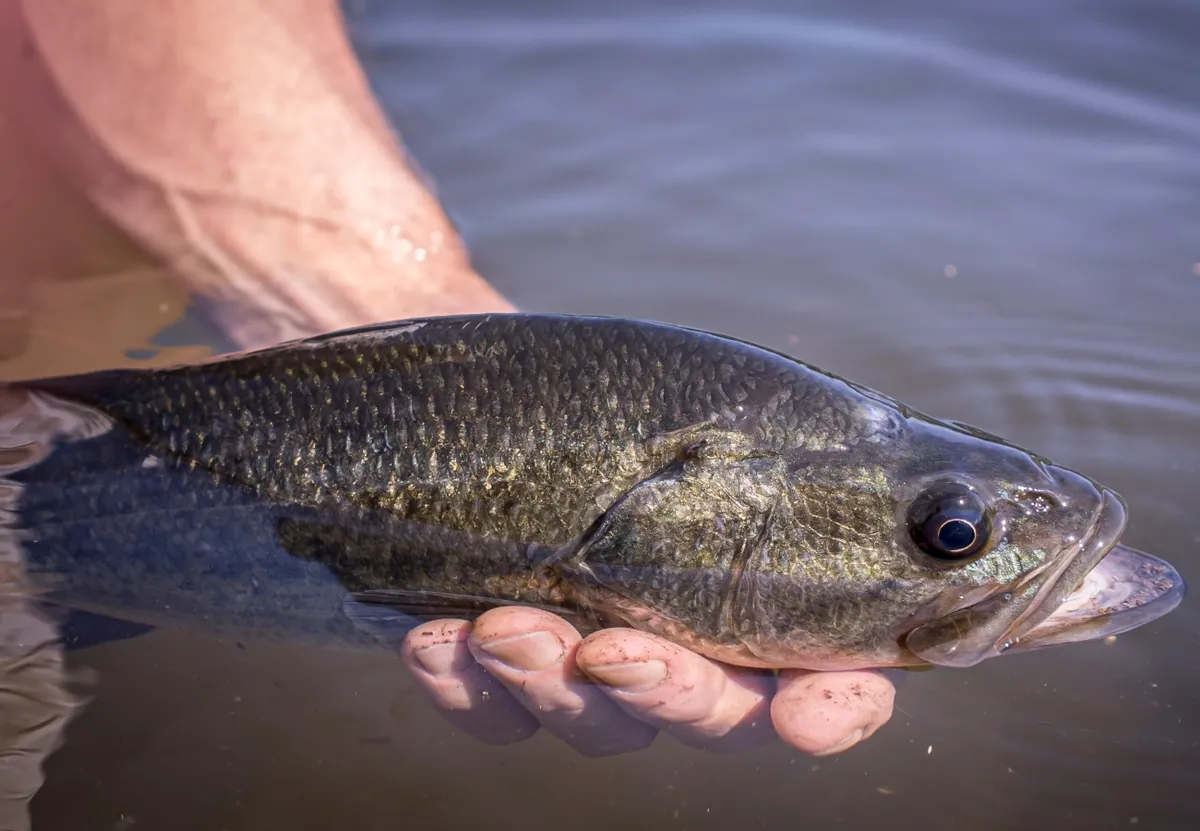
Largemouth bass are predatory members of the sunfish family. They often reward accurate presentation beside cover, but a beginner does not need to cast into the thickest brush. A clean edge you can reach and retrieve from is a better place to learn lure control.
Identification and the updated name
The upper jaw of an adult largemouth normally extends behind the eye. Look for a dark lateral band and a deep dip between the spiny and soft sections of the dorsal fin. Small fish and photographs with a partly open mouth can be misleading.
Current Missouri and Florida agency sources use Micropterus nigricans for largemouth bass. Older material often uses M. salmoides, which current Florida guidance uses for Florida bass. Florida bass and largemouth bass cannot be reliably separated by ordinary visual appearance, so do not claim certainty from a catch photo.
Habitat and food
Vegetated lakes, quieter river areas and waters with cover can support bass. Confirm a local population before choosing a venue. Weed edges, submerged wood, shade and depth changes give you features to investigate, but not every piece of cover holds a feeding fish.
Adults eat a variety of prey, including fish, crustaceans and larger insects. Lure choice should fit the water and what you can present properly. A lure that stays clean and under control is more useful than a complicated setup dragged through weed on every cast.
A first lure session
- Pick a small jig or soft-plastic presentation within the rod’s casting range.
- Inspect the knot, hook point and line near the lure.
- Cast beside a reachable cover edge rather than deep into the obstruction.
- Retrieve at a repeatable pace, noting the depth and any bottom contact.
- Change one feature, such as retrieve speed or pause length, before changing the entire rig.
Season and size
Bass location changes with temperature, food and reproductive activity. Seasonal advice from a northern state should not become a fixed calendar for the southern US. Check any closed season, spawning protection and water-specific rules before targeting fish.
This profile does not set a national typical weight. Local population surveys are a better guide than record-fish headlines, and the distinction between largemouth and Florida bass complicates casual comparisons.
Land and release carefully
Have a suitable net and pliers ready. Support the fish horizontally with its body supported; do not force the jaw backward to hold a large fish at an angle. Keep the handling short and follow current agency release guidance. Your next useful skill is learning to detect a bite without confusing every rock or weed stem for a fish.
Questions from the bank
Keep it helpful. Comments are moderated. Do not share precise locations or personal information.
No approved comments yet. Ask a practical question or share what you learned.