

In this guide
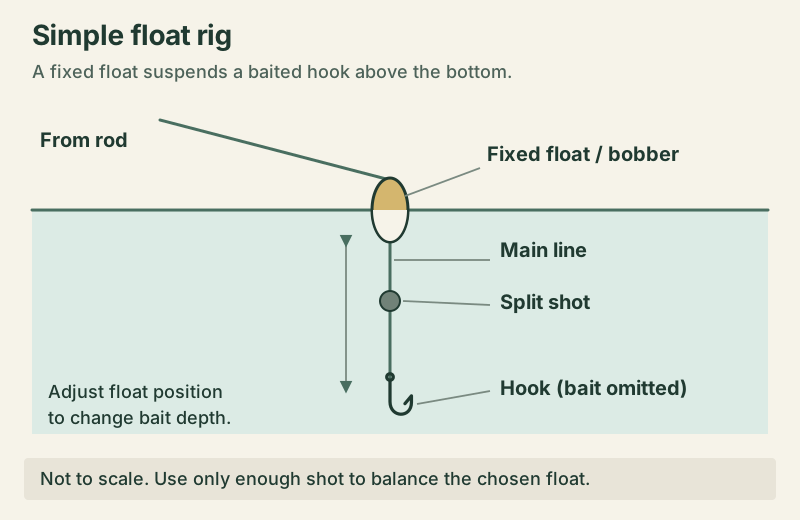
A fixed float, usually called a bobber in the US, holds the bait at a selected distance below the surface and shows movement on the line. The arrangement is useful for learning because you can watch what changes when you alter the depth or amount of weight.
Where it fits
Begin in calm, accessible water with a clear casting space. Small sunfish are a sensible target where the fishery confirms they are present. A fixed float becomes awkward when the distance from float to hook is longer than you can comfortably cast; deeper water may call for a slip float.
The components
- Main line: carries the whole rig from the reel.
- Small float: supports the weight and bait while leaving a visible tip or upper section.
- Split shot: small weights that bring the bait down and help balance the float.
- Eyed hook: sized to the bait and fish, with its point unobstructed.
Assemble and test
- Tie the hook to sound monofilament with a compatible terminal knot.
- Attach the float above it according to the float’s design. A clip-on model may hold the line at both ends; do not force it into a different attachment pattern.
- Add a small split shot roughly 6 to 12 inches above the hook as an initial arrangement. Use tackle pliers, never teeth.
- Check the depth at the actual fishing spot. Set the float so the bait hangs in the intended layer rather than disappearing into bottom weed.
- Add bait and lower the rig close enough to see it. The float should stay visible without carrying a huge amount of unused buoyancy.
- Cast gently to avoid wrapping the hook around the float. Watch continuously and respond to a definite bite.
Make one correction at a time
If the float sinks with no fish attached, it may be overloaded. If it lies flat, weights or bait may be resting on the bottom, or the float may be underweighted. Retrieve and inspect instead of assuming every odd movement is a bite.
If small fish keep taking the bait without being hooked, check bait size, hook exposure and bite response before buying more tackle. Change depth in small steps and remember the setting that produced bites.
Limits and the next lesson
Current and wind can drag this simple arrangement out of position. Use only legal bait and permitted weight materials, and check the water’s rules before fishing. Once the rig behaves predictably, learn to read the float rather than adding extra swivels and attachments.
Questions from the bank
Keep it helpful. Comments are moderated. Do not share precise locations or personal information.
No approved comments yet. Ask a practical question or share what you learned.