

Foundation · Freshwater · All methods
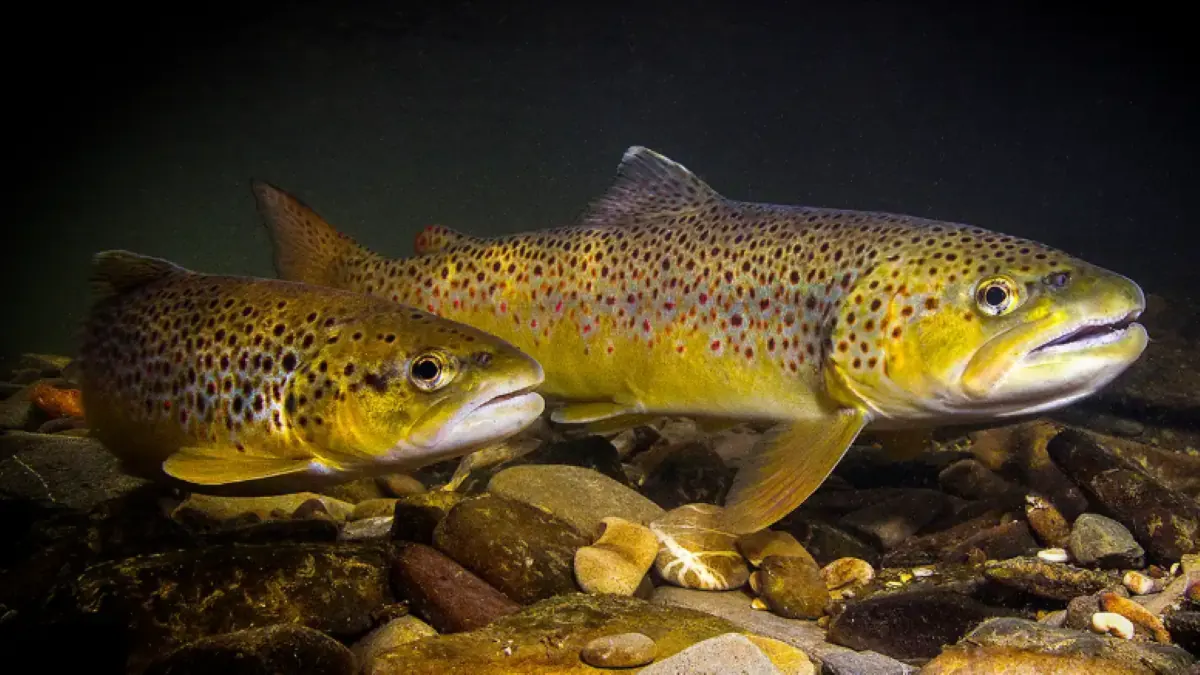
Start with the pattern on the flank. A brown trout commonly has dark spots against a lighter background. Some have red spots with pale halos. A silvery fish can still be a brown trout, so “brown” is a poor first test.
Separate three familiar stream trout
- Brown trout: look for dark spots on the sides, then check the back and tail. The tail is usually fairly square and has fewer dark spots than a rainbow trout’s.
- Brook trout: look for the winding pattern across the back and the bright white front edges on the lower fins.
- Rainbow trout: small dark spots commonly extend across the tail. A pink side band can help when it is visible.
Use the whole fish in your field note
If you already have a side-on photograph, look at the tail before zooming in on an individual red spot. Was the tail visible, and was it spotted across most of its surface? If your only view was of a fish disappearing under a bank, record which features you actually saw. A pool or an undercut may hold trout of more than one species.
Questions from the bank
Keep it helpful. Comments are moderated. Do not share precise locations or personal information.
No approved comments yet. Ask a practical question or share what you learned.