

In this guide
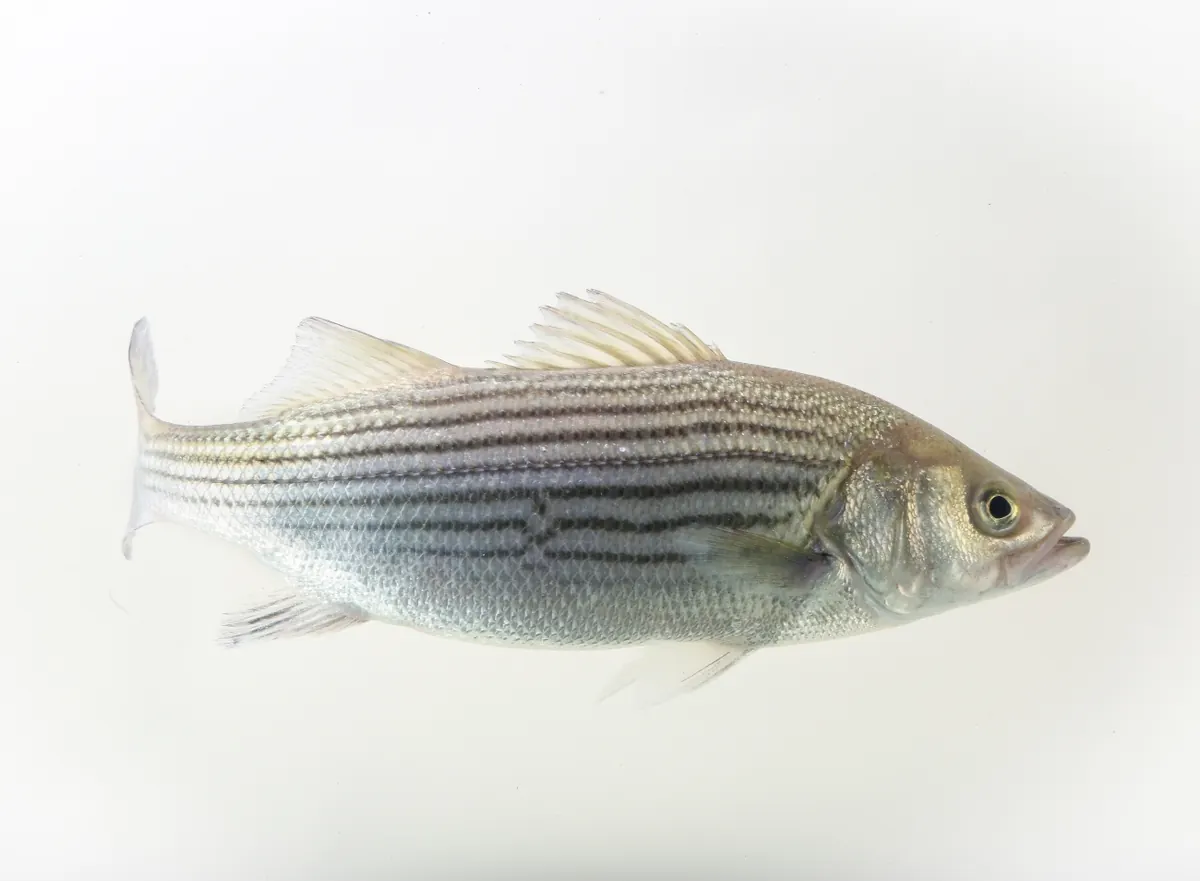
Striped bass, Morone saxatilis, live in coastal systems and in introduced inland populations. The first planning question is which fishery you are visiting. A reservoir approach cannot simply inherit the timing, movement or rules of a tidal estuary.
Separate striped bass from lookalikes
Look for dark horizontal stripes along a silvery body and clearly separated spiny and soft dorsal portions. Texas Parks & Wildlife compares striped bass with white bass and hybrid striped bass using body proportions, stripe pattern and other diagnostic features. Striped bass are generally more slender, with several strong stripes continuing toward the tail.
Hybrids often have a deeper body and broken stripes, but their traits vary. Use the full agency comparison rather than treating a single interrupted line as decisive. Tooth-patch features can help a competent examination, but do not prolong handling or force an unsafe mouth inspection to obtain them.
Keep coastal and inland patterns separate
NOAA describes coastal striped bass returning to fresh or brackish water to spawn, with some adults making substantial seasonal movements and others spending much of their lives in rivers or estuaries. Texas describes reservoir populations, many maintained by stocking. These are different settings within the same species.
Adults consume fish and other prey. In an inland system, check the local agency’s survey and forage information; in coastal water, combine regional fishery information with actual water movement and safe access. A report from another coastline or reservoir may suggest a question, but it cannot confirm fish presence.
Select a presentation with a defined purpose
| Task | Starting approach | Information to record |
|---|---|---|
| Cover a fishable area with moving prey imitation | Appropriate fish-shaped lure or spoon | Depth range, casting route and retrieve |
| Reach fish using a deeper layer | A method and lure capable of controlled depth | How depth was established and whether it remained repeatable |
| Use natural bait | Locally permitted bait and compliant hook arrangement | Bait condition, current and response without unnecessary delay |
Texas agency guidance includes artificial fish imitations and natural bait. Exact hook requirements, targeting permissions and closures must come from the current authority for the water, including whether the location lies in state, federal or inland jurisdiction.
Work through a session
- Check the correct fishery’s rules and any current heat or release advisories.
- Pick a safe, accessible area and identify the route or casting lanes you can fish effectively.
- Select one presentation and establish its behaviour before comparing another.
- Record visible prey, follows, strikes and landed fish separately.
- If conditions change, mark the change in the record rather than attributing the next result solely to a different lure.
Plan release before fishing
Maryland DNR’s 2026 review stresses reducing air exposure and avoiding the hottest conditions for vulnerable striped bass. It recommends suitable soft or rubber-mesh nets and using dehooking or gripping tools as aids, not to suspend the fish’s weight. Support larger fish horizontally when handling is necessary, and keep fingers out of the gills.
A fish swimming away is not proof of complete recovery. Use the local advice on conditions and tackle, and choose another activity when safe release is doubtful. The latest advisory matters more than a generic seasonal “best time” chart.
Keep comparisons honest
Write the population or water type at the top of the journal entry. Record effort and unsuccessful presentations, not just catches. Over time, compare similar situations; a windy reservoir troll and a calm estuary shore session are not equivalent tests of a lure.
The useful target is a pattern that survives repeated observation, with identification and fish welfare kept central to the process.
Questions from the bank
Keep it helpful. Comments are moderated. Do not share precise locations or personal information.
No approved comments yet. Ask a practical question or share what you learned.