

In this guide
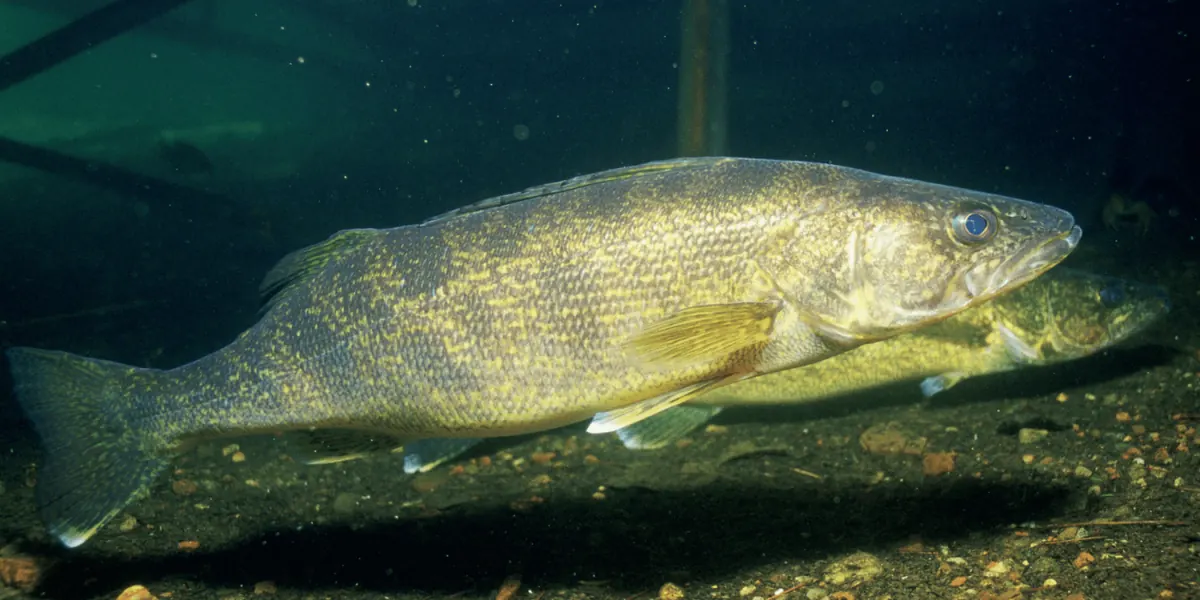
Walleye, Sander vitreus, are best approached by linking identification, location and depth control. Low light can be useful, but it is not a guarantee of feeding fish. Before changing lure colour, establish whether the presentation is reaching an area which the fish could be using.
Identification and lookalikes
Look for two separated dorsal fins, the first spiny and the second soft-rayed, with a dark patch toward the rear base of the front dorsal fin. The lower tail tip is white. The body often appears olive or gold, but colour alone is weak evidence.
Sauger usually have distinct spots across the spiny dorsal fin and lack the characteristic white lower tail tip. Saugeye hybrids complicate the comparison. Minnesota DNR’s identification page and the regional fisheries guide should be checked together when the features do not agree. Photograph visible details promptly if appropriate, but do not retain an uncertain fish by choosing the identification with the most convenient rule.
Location changes with conditions
North Dakota Game and Fish describes sand and gravel habitats and low-light feeding ability. Minnesota DNR links seasonal location to prey, water temperature, oxygen and other factors. Useful places to investigate include flats, points, humps and changes in depth; the promising feature is the one connected to the conditions and prey actually present.
Do not turn a regional seasonal description into a calendar for every reservoir. Check recent fisheries information for the water, then make an observation plan. If fishing in darkness, inspect access and the landing area while visibility is good and use an appropriate safety plan.
Choose one method to control
| Method | Question it can answer | Control to watch |
|---|---|---|
| Jig presentation | Are fish responding near a specific feature or layer? | Depth, line angle and retrieve consistency |
| Casting a suitable diving lure | Will fish respond to a moving presentation across the target area? | Actual running depth and contact with the bottom |
| Trolling | Can a repeatable route locate active fish? | Route, speed and the lure’s intended operating range |
| Float-supported legal bait | Will a more stationary presentation work at a chosen depth? | Depth setting and drift |
These methods are all represented in agency guidance; the table turns them into distinct tests. It does not provide a universal lure depth, towing speed or bait allowance.
A practical jigging comparison
- Select an accessible feature and an appropriate legal jig setup.
- Establish how the lure settles with the line and conditions in front of you.
- Make several controlled presentations along the same part of the feature, keeping the movement repeatable.
- If contact is unclear, review line angle and weight before adding larger movements.
- Change only one presentation variable, then record any difference in contact, bites or fouling.
Bottom contact is information, not a requirement to drag continuously through every obstacle. If the rig repeatedly lodges, reconsider the line of approach or method. A heavier jig may improve control in one setting and make the problem worse in another.
Keep a useful session record
Write down light conditions, general location, depth source, method and actual fishing time. Separate a depth measured by equipment from one estimated from a cast. Record no-catch sessions too; otherwise your notes can exaggerate the reliability of a remembered pattern.
Have net and unhooking tools ready and take care around teeth and dorsal spines. Check rules for the exact water before fishing or retaining a catch. Useful walleye decisions begin with verified identity and repeatable presentation, rather than a promise that the right hour or colour will solve every trip.
Questions from the bank
Keep it helpful. Comments are moderated. Do not share precise locations or personal information.
No approved comments yet. Ask a practical question or share what you learned.