

In this guide
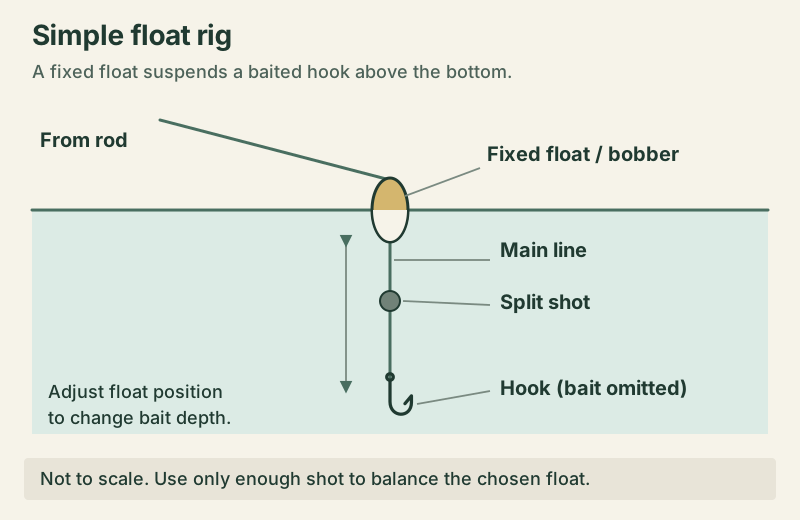
For a first UK coarse-fishing lesson, a short whip can remove the complication of operating a reel. The line attaches to the pole tip and the float shows movement at the bait. This lesson is for a suitable canal or stillwater margin, not strong rivers or deliberately targeting large carp.
Choose the venue and tackle together
Ask the fishery or coach whether a whip suits the expected fish and bank. Use the correct nation-specific permissions and fishery rules. Keep clear of overhead power lines, locks, moored boats and places where the tackle would obstruct other waterway users.
A ready-made rig contains line, float, shot and hook. Check that it is intended for your whip and target fish rather than choosing only by price. Have a landing net and the correct unhooking tools ready before putting bait on the hook.
Set the depth before feeding
- Attach the rig securely as the whip maker specifies.
- Check the float’s balance with the shot supplied, leaving a readable tip above the surface.
- Use a suitable plummet to find the depth at the intended fishing point. A plummet is a temporary weight used to locate the bed.
- Move the float until the plumbed rig shows the bed level. Remove the plummet before fishing.
- Set the bait at the layer you want to test, commonly close to the bottom for an initial small-fish session.
- Lower or swing the bait out under control, checking behind you first.
Watch and respond
Keep your eyes on the float. Respond to a clear bite with a controlled lift that takes up line, not a violent overhead sweep. If you miss repeatedly, check the bait, hook exposure, depth and the amount of loose line before changing everything.
Use only permitted bait and introduce modest quantities at first. Feeding is an experiment: adding more cannot retrieve bait that has already gone into the water. A coach can help you judge quantity and frequency for the venue.
Shared-water habits
Lift the rig out for passing boats and wait until the disturbance settles before resuming. Keep the towpath clear of poles, nets and loose hooks. Position the net where it can be reached without standing on an unstable edge.
Move forward one skill at a time
Record the depth and float behaviour that produced bites. Learn to land and unhook fish efficiently before extending the distance. A rod-and-reel waggler setup is a separate next lesson, with different casting and line-control demands; it is not simply a longer whip rig.
Questions from the bank
Keep it helpful. Comments are moderated. Do not share precise locations or personal information.
No approved comments yet. Ask a practical question or share what you learned.