
In this guide
Plan cleaning as part of the trip, especially when moving between waters. Mud, retained water, plants and small organisms can travel on equipment that otherwise looks ready to use. A clean rod does not compensate for a wet net, dirty boot sole or bait container carried untreated to another venue.
Identify everything that touched the water
The US Fish and Wildlife Service’s aquatic-nuisance guidance includes waders, footwear, ropes, anchors, nets, downrigger cables, fishing line and other field equipment. Inspect the whole setup rather than only the boat hull. Separate used equipment from clean spare items while packing.
In Northern Ireland, DAERA also highlights the risk of moving fish diseases and invasive organisms on fishing equipment, particularly equipment used overseas. The required treatment depends on the location and concern. Follow the relevant authority and venue’s current procedure rather than substituting a universal home-made disinfectant recipe.
A practical departure routine
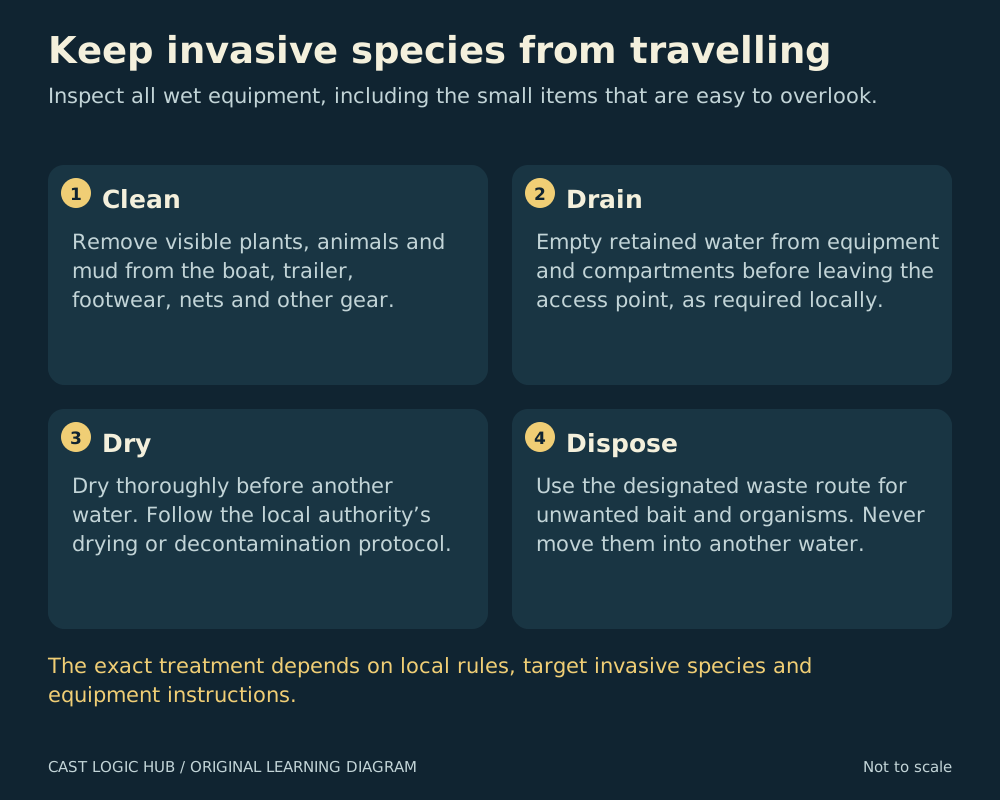
- Before leaving access, inspect the boat, trailer if used, net, footwear and equipment for attached material.
- Remove visible plants, animals and mud as directed at the site. Use the designated disposal and washdown arrangements.
- Drain retained water from permitted equipment and compartments according to local requirements and the owner’s manual.
- Deal with remaining bait through an authorised disposal route. Never release unwanted live bait or other organisms into another water.
- Keep used wet equipment contained for transport without mixing it into the clean kit.
- Complete the required cleaning, treatment and drying before using it elsewhere.
This routine organises the task; it does not override inspection, decontamination or drainage requirements at a particular waterbody. If a site has an inspection station, follow the staff’s directions.
Use a kit-by-kit checklist
| Equipment | Places easily missed | Next action |
|---|---|---|
| Net and weighing gear | Mesh folds, handles, bags and straps | Open out, inspect, clean and dry fully. |
| Boots and waders | Soles, seams, gravel guards and laces | Brush visible material and follow the required treatment. |
| Boat or kayak | Compartments, fittings, drive areas and retained water | Use maker-compatible cleaning and drainage procedures. |
| Anchor and rope | Mud between turns and inside storage bags | Inspect the entire working length and storage. |
| Bait containers | Water, packing material and unused live organisms | Follow local disposal and transport instructions. |
Drying needs an actual plan
Do not close wet nets inside a bag and call the equipment dry because its outside feels dry. Open folds, separate components where the manual permits and provide a suitable drying place. Record when cleaning and drying began if the next trip is close.
Official drying advice can include durations and exceptions, but those should be taken from the rule or protocol applicable to the next water. Conditions and target organisms differ. If the required interval cannot be met, arrange approved decontamination or use a clean, dedicated set rather than assuming a brief wipe is sufficient.
For consecutive trips, write the water names and used items on the packing checklist. That simple record can prevent a spare net from being mistaken for clean equipment after several venues and several people have shared the car.
Avoid damaging treatments
USFWS notes that hot water can damage equipment or injure people if used incorrectly, and its general Clean, Drain, Dry page discourages indiscriminate chemical treatment of recreational equipment. By contrast, particular local disease protocols may specify an approved disinfectant. Use the relevant official protocol with the product and equipment instructions; do not combine chemicals or increase strength by guesswork.
Motor flushing is also model-specific. Follow the owner’s manual and any site-approved process. A generic cleaning checklist is not authority to run a motor dry or direct damaging pressure into seals and electronics.
Report observations without transporting specimens
If you suspect an invasive organism, record a photograph and the location for the appropriate authority’s reporting process. USFWS encourages reporting new sightings. Do not move an unfamiliar live organism to another water to demonstrate it, and do not publicly label a species invasive solely from an uncertain photograph.
Keep the cleaning record with your trip checklist. The aim is to make the next departure easy to verify: which equipment was used, which procedure was followed, and which items still need attention.
Questions from the bank
Keep it helpful. Comments are moderated. Do not share precise locations or personal information.
No approved comments yet. Ask a practical question or share what you learned.