

In this guide
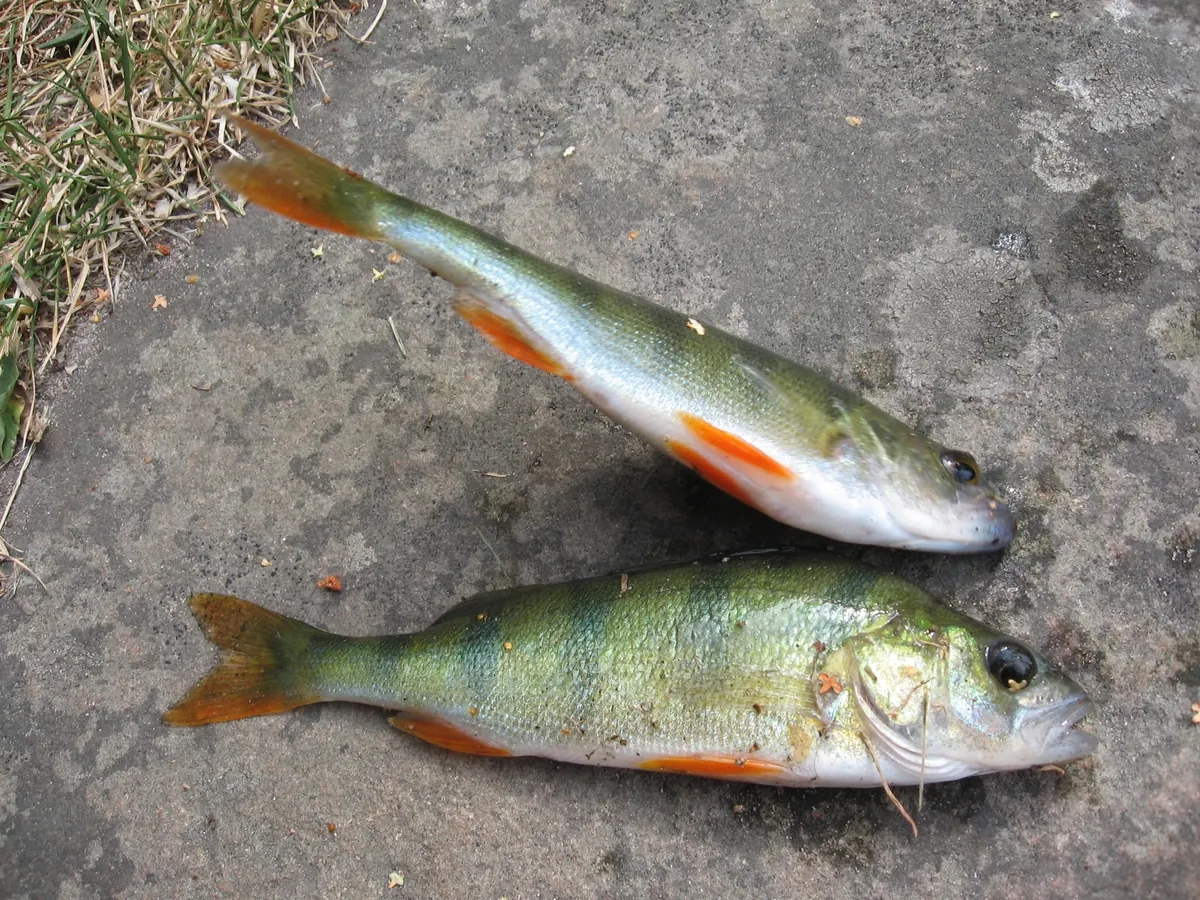

The UK perch is European perch, Perca fluviatilis, not the yellow perch found in the US guide. It is a predatory fish that occurs in many lowland freshwater systems. Small perch can make an accessible first target where a fishery confirms they are present.
Identification and handling features
Look for dark vertical bars over a greenish body, coloured lower fins and a prominent spiny dorsal fin. The gill-cover area also has sharp edges. Colour changes with light and condition, so use the whole pattern and shape rather than a single bright fin.
Keep fingers away from the gills and learn a supported grip from a competent coach. Do not squeeze a fish simply to flatten its spines. Set up the net and unhooking tools before fishing so the first catch is not left waiting while you search a tackle bag.
Where and how it feeds
Perch live in ponds, lakes, reservoirs, canals and lowland rivers. Their diet includes invertebrates, crustaceans and fish, with larger prey becoming possible as they grow. They may form shoals, although seeing a small perch does not prove a group of large fish is beside it.
Near-bank cover can give a beginner a useful starting place. Stay within permitted access and avoid casting under moored boats or into a position from which you cannot safely land a fish.
A straightforward first session
- Choose a simple float rig matched to the fishery’s fish and bank conditions.
- Plumb the depth, then set the bait where you can present it without burying it in weed.
- Try a small portion of worm or another permitted bait.
- Watch continuously and respond promptly to a definite bite, reducing the risk of a bait being swallowed deeply.
- Check the hook and bait after each retrieve and change depth deliberately if nothing happens.
Know when the approach becomes different
Small lures can also catch perch, but predator lure fishing can encounter pike. That changes the trace and handling requirements. Do not carry over a light mono perch rig into deliberate pike fishing; get species-specific instruction and suitable equipment first.
Season and size
Perch spawn in spring, laying ribbons of eggs on submerged material. Timing varies with local conditions, and fishery or statutory restrictions take priority over a general seasonal description. Published maximum sizes are not typical beginner catches, so this page does not present a record-like weight as the norm.
After a session, note the depth, bait and handling lessons in a private journal. Keep the location broad if sharing it, and use the correct UK nation when checking permissions for the next trip.
Questions from the bank
Keep it helpful. Comments are moderated. Do not share precise locations or personal information.
No approved comments yet. Ask a practical question or share what you learned.