

In this guide
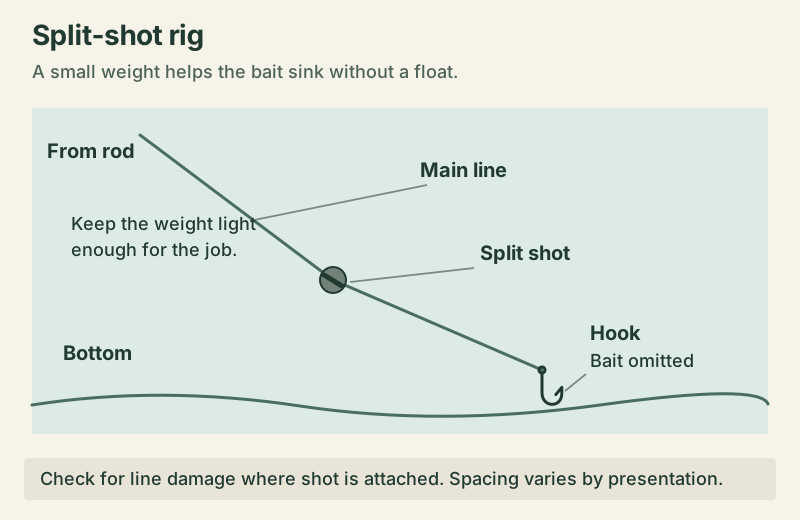
A split-shot rig places one or more small pinch-on weights on the line above a hook. With no float to support it, the rig sinks and follows the water or your retrieve. Its simplicity makes it useful for learning how much weight is actually needed.
Choose a manageable spot
Start beside a clear, gently sloping bank or a modest current you can fish from dry land. Heavy flow, thick submerged timber and steep drop-offs complicate the lesson. The rig is not snag-proof: an exposed hook and pinch-on weights can both lodge between rocks or in vegetation.
Equipment
Use a matched rod and reel, monofilament within the tackle’s stated range, an appropriate eyed hook, small split shot and legal bait. Choose non-lead weights where practical and check local restrictions. Carry a small container for discarded line and damaged weights.
Build and fish it
- Inspect the last section of line, removing any rough or whitened material.
- Tie the hook with a compatible knot and check the connection.
- Pinch the first shot on gently, about 8 to 18 inches above the hook as an initial trial. Avoid flattening or cutting the line.
- Make a short cast. Allow the rig to settle while maintaining enough contact to notice movement without pulling it straight back.
- In a gentle current, aim for occasional bottom contact while the bait continues to drift. If it stops repeatedly, reduce weight or try a cleaner route.
- Retrieve and check the bait and line. Add a small amount of weight only when you cannot reach or control the intended depth.
Understand what the line tells you
A regular tapping rhythm can be the weight touching stones. An unusual pull, sideways movement or a sudden change in tension deserves attention. Learn the normal feel of the particular drift before treating every touch as a fish.
Common problems
Too much weight anchors the bait and increases hang-ups; too little may leave it far above the target layer. A shot clamped onto damaged line creates a weak point. Repeatedly sliding a tight shot along the line can also scrape it, so open or replace it rather than dragging it hard.
Next step
Keep notes on the number and position of weights instead of changing bait, depth and location together. If you want a bait to remain on the bottom in one place, compare the slip-sinker rig. If you need a visible bite signal, return to a float rather than trying to infer everything by touch.
Questions from the bank
Keep it helpful. Comments are moderated. Do not share precise locations or personal information.
No approved comments yet. Ask a practical question or share what you learned.