

In this guide
The Palomar attaches line to a hook, swivel or lure using a doubled strand. It is a useful option when the line manufacturer recommends it, including many braided lines. Its shape is simple, but crossed strands or a loop caught around the wrong part of a lure can spoil the connection.
Before you begin
You need room to pass the entire piece of tackle through a loop. A small hook is straightforward; a long lure with several exposed hooks is less convenient. Cover lure hooks for practice, or learn on a smooth closed ring before tying fishing tackle.
Both strands must fit through the eye without being forced or scraped. If a folded loop will not fit, pass the tag through once, then back through from the opposite side to make the doubled section.
Step-by-step
Open the complete illustrated sequence · Illinois DNR knot instructions
Read the detailed tying instructions
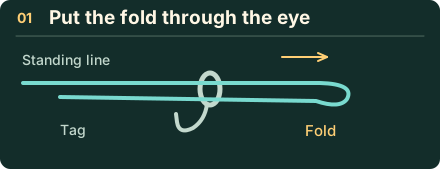
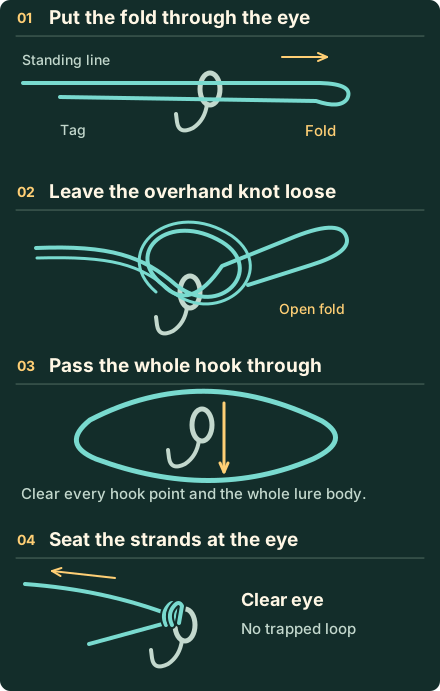
- Double a generous length of line and pass the folded end through the eye. Keep the two strands lying together.
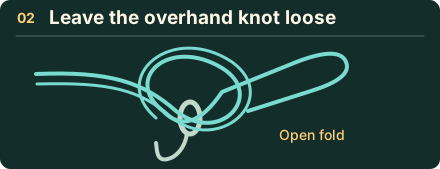
- Use the doubled section to form a loose overhand knot, leaving the hook or lure hanging below it. Do not pull the overhand knot tight yet.
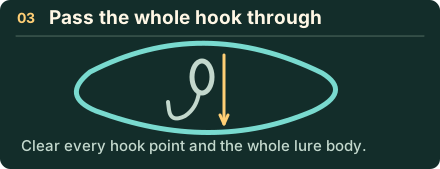
- Open the folded loop and pass the whole hook or lure through it. Check that every hook point and attachment clears the loop.
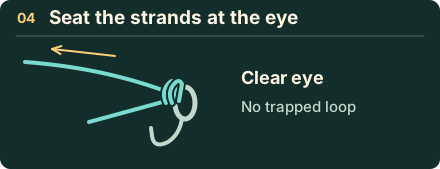
- Bring that loop up over the eye and the loose knot. It must not remain trapped under a hook bend or around a lure body.
- Moisten the line. Draw the standing line and tag gently while guiding the strands into place, then seat the knot firmly.
- Check for crossed strands, trapped loops and damage. Pull-test safely before trimming the tag.
What a useful inspection shows
The knot should sit at the eye with no stray loop around the tackle. Both strands through the eye should be tidy. If one strand cuts across the other, start again rather than trying to force the finished knot straight.
Limits worth knowing
A correctly named knot is not automatically suitable for every line construction, diameter or eye. Follow product instructions when they differ from a general lesson. This guide provides no breaking-strength percentage and does not claim laboratory verification.
Next skill
Practice deliberately making the loop large enough before touching a real lure. For a drop-shot, the long tag has another job: it continues below the hook to the sinker. Read the separate rig instructions before converting a normal Palomar connection into that setup, because hook orientation and the retained tag both need checking.
Questions from the bank
Keep it helpful. Comments are moderated. Do not share precise locations or personal information.
No approved comments yet. Ask a practical question or share what you learned.