

In this guide
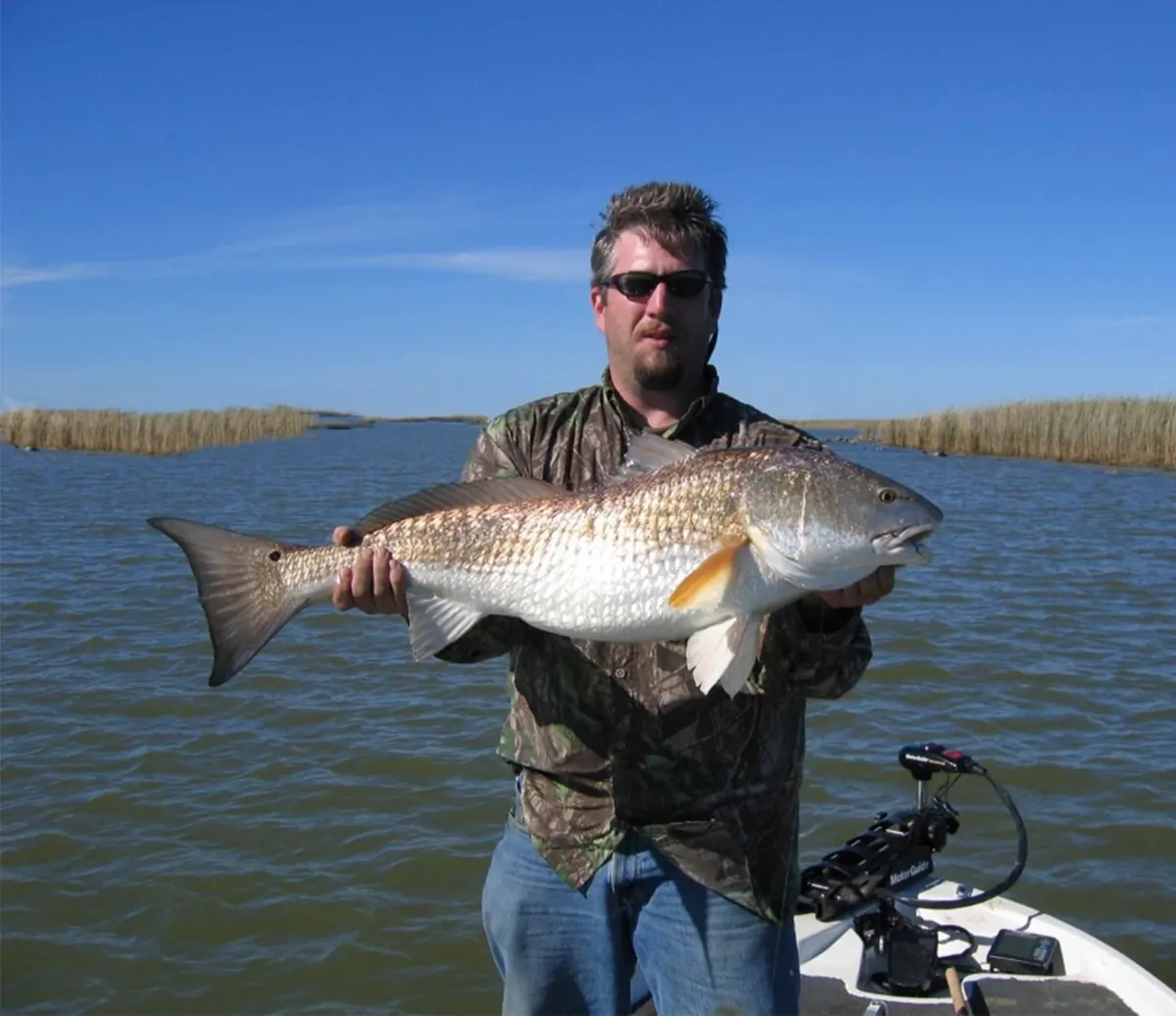
Red drum, Sciaenops ocellatus, are also called redfish or channel bass. Identify them from several features, then choose a method for the habitat you can actually fish. A shallow estuary, a surf beach and an inlet do not present the same access or tackle problem.
Recognise red drum and check similar fish
Typical fish have a copper or bronze cast and one or more dark, eye-like spots near the base of the tail. Colour can be much paler or darker, and occasionally a fish lacks the familiar spot. The lower jaw lacks chin barbels.
Black drum have chin barbels and normally lack the red drum’s tail-base marking. North Carolina also identifies large Atlantic croaker as a possible confusion. Compare head, mouth, body and fin features with the authority’s guide; a single dark mark in a poor photograph is not enough to resolve every fish.
Understand where the fish feeds
Red drum occupy coastal and estuarine habitat, including grass, sand, mud, oyster-associated areas and surf zones. Young fish make extensive use of protected inshore areas, while older fish can use more open coastal water. Florida Museum and state agency profiles describe broad habitat and salinity tolerance, not a requirement to fish one universal depth.
Crabs, shrimp and small fish are established prey. “Tailing” describes a fish feeding head-down in shallow water with its tail visible above the surface. It is an observation about the fish’s position, not permission to approach through fragile habitat or enter unsafe water.
Match the method to the obstacle
| Fishing task | Reasonable starting option | Check before committing |
|---|---|---|
| Work an accessible shallow area | Suitable shallow-running lure or spoon | Whether it clears vegetation and follows the intended path |
| Present a shrimp-like target at a controlled level | Appropriate jig or permitted bait beneath a cork | Depth setting, drift and local tackle rules |
| Fish surf or stronger water | Equipment and presentation suited to the full conditions | Safe access, complete casting load and ability to control the rig |
Texas and Florida agency guidance includes spoons, jigs, plugs and natural bait. These categories offer alternatives; they do not establish that one metallic colour or one bait size is always best.
A controlled inshore search
- Check the exact area’s rules, weather, tide information and access. Identify how you will leave as conditions change.
- Choose a reachable feature with a safe landing route and a clear casting lane.
- Test the lure or bait presentation nearby so you know whether it sinks, drifts or fouls as expected.
- Work separate lanes through the area and note where actual fish activity occurs.
- Change depth or angle before changing several tackle components together.
- Inspect line and terminal tackle after contact with abrasive structure or a fish.
Read the result without overclaiming
If you see fish but repeatedly retrieve weed, the first problem is presentation. If you see no fish and get no response, consider whether another accessible habitat offers a better test. Neither result proves that the fish reject a particular colour.
Keep a record of water type, observed movement, method and effort. Use actual conditions rather than copying a tide-stage claim from another estuary. No simple rising- or falling-tide rule can establish a safe route or guarantee fish.
Prepare for a fish larger than expected
Choose landing and unhooking equipment appropriate to the possible catch, and follow local fish-handling guidance. Keep handling brief and support the fish rather than improvising an unsupported lift. Check current size, retention and gear requirements directly before fishing; this profile intentionally avoids a limit table which may become stale.
Photographs and notes should confirm identity and document the session without delaying release. A sound red-drum plan combines habitat knowledge, controlled presentation and a safe route home.
Questions from the bank
Keep it helpful. Comments are moderated. Do not share precise locations or personal information.
No approved comments yet. Ask a practical question or share what you learned.