
In this guide
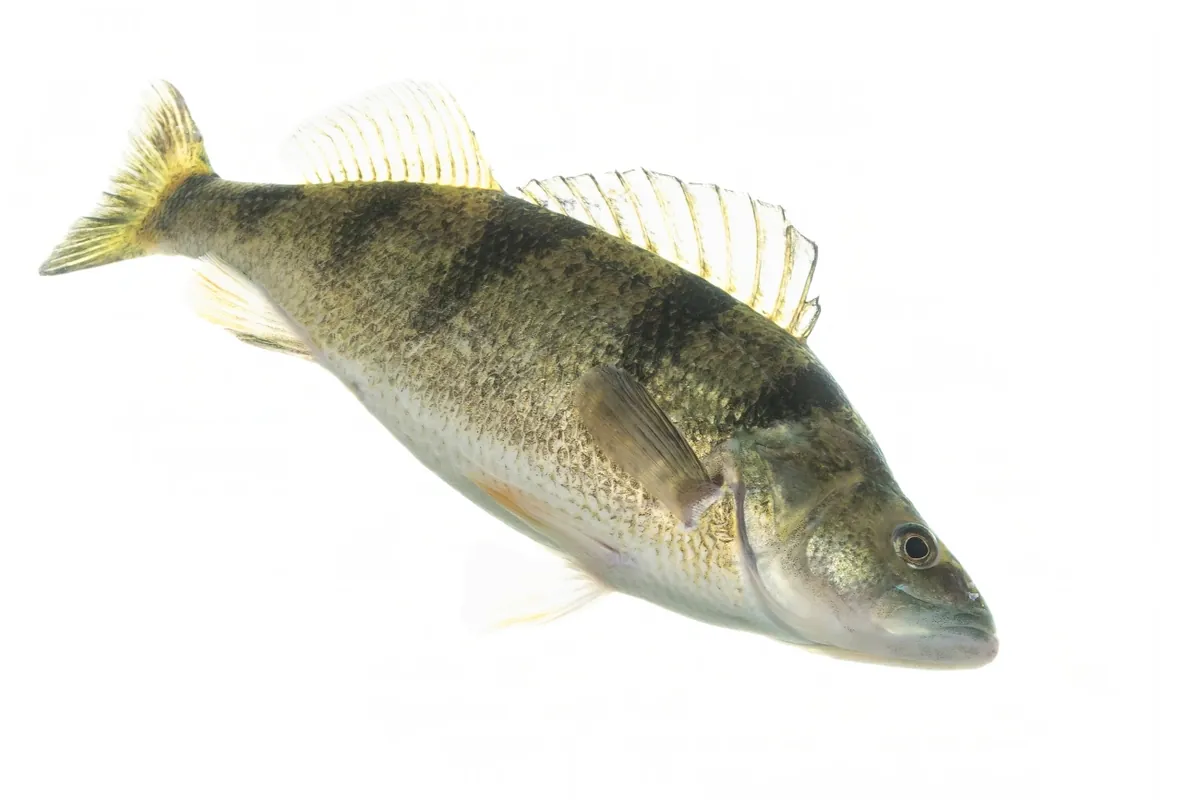
Yellow perch, Perca flavescens, are schooling freshwater fish associated strongly with northern North American waters. They are different from the European perch covered in the UK section. The word perch alone is also used loosely for other fish, so match the name to the features.
Identification
Look for regularly spaced dark vertical bars over yellowish or brassy sides and two separate dorsal fins. The front dorsal has spines. The teeth are small rather than the prominent canine teeth of walleye and sauger, which belong to the same family.
Colour is affected by light and condition, and young fish can be confusing. Use an official regional identification guide instead of assuming every barred fish is a yellow perch. Handle the dorsal fin and gill-cover area with care.
Range and habitat
Yellow perch are common in many northern lakes, while their distribution becomes more limited toward the southern edge of their range. Missouri, for example, reports scattered populations. A general range map is not enough to select a particular pond.
Perch eat small crustaceans, insects and fish. Schools can move, so a previously productive patch of water may become quiet without any mistake in your tackle. Check several safe, permitted positions rather than repeatedly casting into one empty area.
A beginner’s approach
- Confirm perch are listed for the water and choose bank access with safe landing space.
- Start with a small legal bait beneath a float, or a light jig you can keep under control.
- Adjust the presentation toward the depth you are testing. Bottom feeding is common, but do not assume every fish is touching the bed.
- Give the spot a purposeful trial, then change depth or position.
- When a bite comes, note the location and depth before making another cast.
Size and seasonal context
Missouri describes adult yellow perch commonly at 6 to 8 inches, with weights usually between 4 ounces and 1 pound. Other waters support different size structures; record specimens are not a useful expectation for a first trip.
Spring spawning occurs according to regional water conditions. Wisconsin describes eggs laid without nest construction or parental guarding. This page does not provide an ice-fishing plan: winter ice requires separate safety knowledge, equipment and local assessment.
Handle and record
Wet your hands and keep the fish supported while avoiding the sharp dorsal spines. Prepare the unhooking tool before fishing. Record the species only when the features support it, and use a general location in a public journal. Consult the current authority for the relevant state and water before retaining fish or transporting bait.
Questions from the bank
Keep it helpful. Comments are moderated. Do not share precise locations or personal information.
No approved comments yet. Ask a practical question or share what you learned.