

Read the measurement named in the species rule before putting the fish on the board. A fork-length reading and a total-length reading from the same fish can give different numbers.
Set up the board
Have a flat ruler ready before bringing the fish aboard. If you have a flexible tape, lay it flat on a firm surface. Place the fish on its side and read a straight line; a tape running along the curve of the body takes a longer path.
Find the endpoint the rule specifies
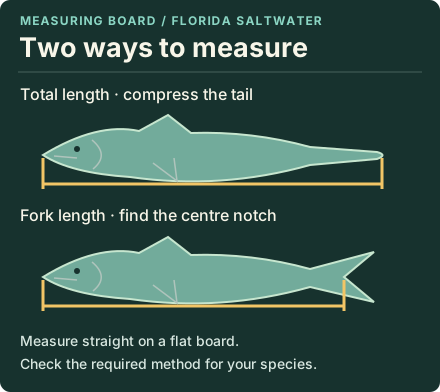
- Total length. Start at the foremost point of the head with the mouth closed. Gently compress the tail and read its farthest tip. Florida FWC illustrates this method with red drum.
- Fork length. Start at the jaw or snout tip with the mouth closed and read the centre indentation of the forked tail. Florida pompano is one example. The long tips of the fork extend beyond the measurement point.
- Lower-jaw fork length. Some billfish rules name this separate method. The starting point is specifically the tip of the lower jaw. Use the relevant species guidance.
Make the keep-or-release check
Confirm the species, water and applicable rule, then compare the unrounded measurement with that rule. Do not convert fork length to total length using a guessed percentage. If you cannot establish that retention is lawful, release the fish promptly using appropriate handling.
FWC measurement diagrams · Current Florida permit and pompano rules. This card covers Florida saltwater methods. Other jurisdictions can define endpoints differently.
Questions from the bank
Keep it helpful. Comments are moderated. Do not share precise locations or personal information.
No approved comments yet. Ask a practical question or share what you learned.