
In this guide
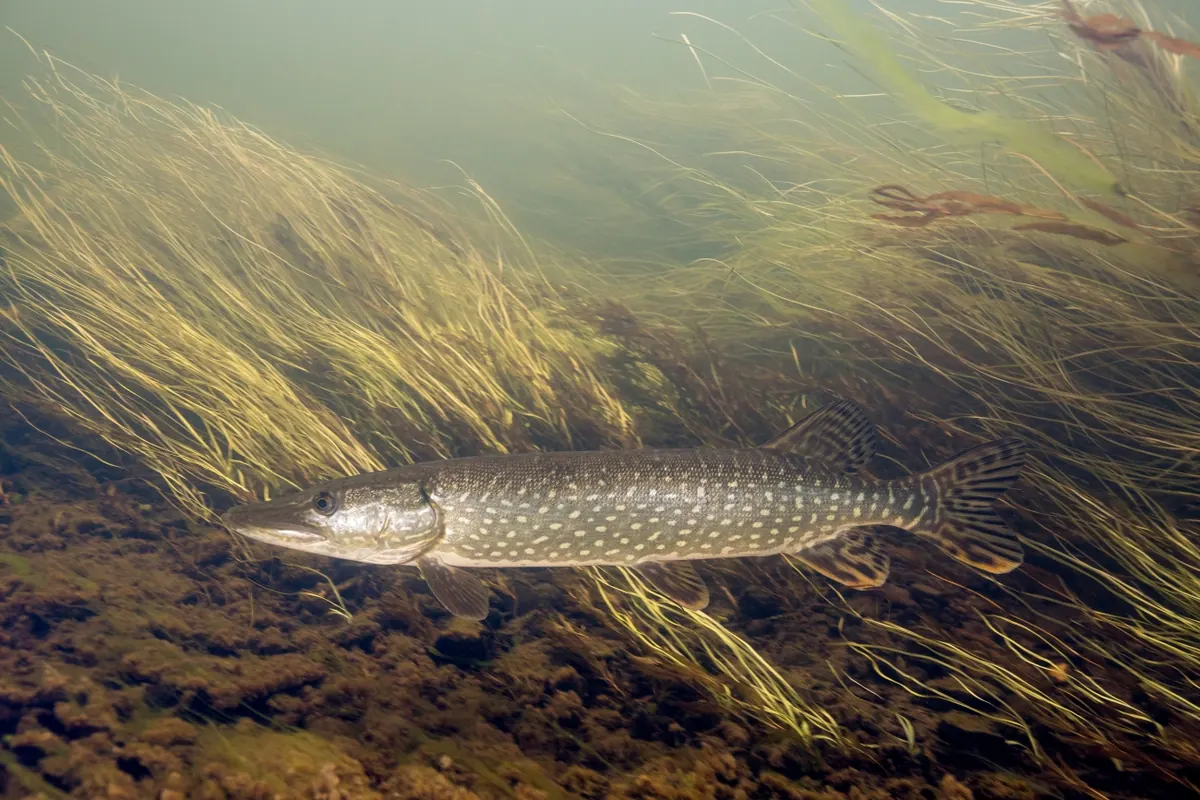
Northern pike, Esox lucius, are ambush predators whose tackle and handling requirements deserve attention before the first cast. Identify them through several features, select a presentation which works around the available cover, and prepare tools which keep fingers away from teeth and exposed hooks.
Recognise the fish
Look for an elongated body, broad flattened snout and dorsal fin placed far back near the tail. Typical fish have pale oval or short bar-like markings on an olive background. The cheeks are fully scaled, while only the upper part of the gill cover is scaled. These head features are more useful than assuming every long green predator is a pike.
Muskellunge and pickerels require comparison with the relevant regional guide. Northern pike usually show light markings against a darker body; muskellunge can differ in marking pattern and cheek scalation. Hybrids and unusual individuals make single-feature identifications unreliable. Never put fingers into a toothed mouth to complete an identification.
Choose habitat with a workable presentation
Vegetation, its edges and other cover provide places for pike to intercept prey. In rivers, backwaters, eddies, submerged timber and deeper pockets can be relevant. The National Park Service describes seasonal movement toward cooler, adequately oxygenated water as conditions warm, particularly for larger fish. That is a reason to reconsider location, not a fixed depth instruction.
First confirm that pike occur in the water and check its current rules. In some places they are valued native sport fish; elsewhere they are introduced and subject to different management. A species profile does not authorise bait transport or movement of fish between waters.
Prepare for the hook-up and release
Use tackle capable of controlling the intended lure and likely fish around that cover. Include a suitable bite-resistant leader; ordinary bass leader assumptions are not a substitute for protection from pike teeth. Check the leader, clips and connections after contact with fish or obstacles.
Have a sufficiently large landing net and long unhooking pliers accessible. Minnesota DNR specifically warns against hoisting a sizeable pike with the rod. A lure carrying several treble hooks can complicate removal; choose an arrangement you can handle competently and arrange instruction if you have not unhooked pike before.
A systematic lure session
- Select a manageable stretch of vegetation edge or another identifiable feature.
- Choose a lure that can travel through the intended layer without continually fouling. Spoons, spinners and plugs are established options.
- Make a short test retrieve to check action and whether the leader or terminal connection interferes with it.
- Cover distinct casting lanes. Record follows or contacts separately from confirmed catches.
- If the lure repeatedly collects weed, alter its path or select an appropriate presentation before simply retrieving faster.
- After a fish or forceful contact, inspect the rig before casting again.
Interpret what happens
| Observation | Useful next question |
|---|---|
| Fish follows without taking | Can a controlled change in retrieve or presentation be compared at the same feature? |
| Lure repeatedly fouls | Is it reaching the fishable edge or passing through unusable cover? |
| No contact | Have several plausible locations and layers been tested, or just one repeated cast? |
This is a search procedure, not a claim that a reluctant pike can always be made to take. Keep the landing route clear and stop when conditions make safe handling or access doubtful. Record the feature, layer and lure behaviour so the next session begins with evidence rather than a remembered colour alone.
Questions from the bank
Keep it helpful. Comments are moderated. Do not share precise locations or personal information.
No approved comments yet. Ask a practical question or share what you learned.